



Learning follows curiosity, not the other way around
Why we chose to start from the student’s questions rather than from a fixed pathway.
Read the articleAltaïr is an AI-powered learning-support platform for students from elementary school through high school.
Designed to support understanding, reasoning and independence, it accompanies students in their schoolwork and lets them explore new fields of knowledge.
Its approach is based on pedagogical dialogue: questioning, explaining, rephrasing, and offering exercises and review materials, gradually adapting to the learner’s needs.
Altaïr is developed by a team that brings together teaching experience, design skills and technological expertise, with particular attention to accessibility and to the diversity of children.
Students do not all learn in the same way, at the same pace or with the same needs. This is especially true for children with special educational needs, but it really concerns every student: some need more time, others want to go deeper, to see a concept in a different light, or simply to rediscover the joy of learning.
Altaïr offers a digital solution that personalizes learning, consolidates the fundamentals and gives everyone access to a much wider field of knowledge. The aim is twofold: to help each student make progress, and to let them develop their curiosity, independence and potential.
Our project began on August 11, 2026, and we have not been idle since! The Altaïr platform is currently being developed and tested. A beta phase will be opened gradually before commercial launch. Sign up for the waitlist to be informed of the next steps and the launch date.
The geographic rollout will be announced gradually. France and French-speaking countries are already planned. We are considering international expansion within the next three years. Sign up for the waitlist to follow the next steps of the rollout.
Pricing is still being defined. Participants in the beta phases will be able to benefit from specific conditions at the time of commercial launch, which will be communicated when they take part. Taking part in the beta is free and carries no obligation.
An inclusive and accessible approach aims to enable everyone to access and take part in learning, taking into account the diversity of cognitive, sensory, motor, psychological and neurodevelopmental profiles.
Inclusive means that the diversity of needs and ways of functioning is taken into account in the design of the learning experience. This may in particular concern people with neurodevelopmental conditions, learning difficulties, a disability or special educational needs.
Accessible means that the environment, content and features are designed to limit the obstacles that could make learning harder or prevent access to it. This covers, in particular, cognitive, sensory, motor and digital accessibility.
The aim is not to offer a different pathway for each profile, but to reduce barriers to learning and to let everyone make the best use of their abilities.
Altaïr is a digital educational tool whose technological core is a language model specifically configured for educational, inclusive and accessible use. The goal is not simply to give access to a general-purpose AI, but to create a genuinely inclusive and accessible learning environment, able to adapt its answers, explanations and suggestions to each student’s profile.
This model is designed to take into account the learner’s level, pace, difficulties, special educational needs and interests, in order to offer differentiated explanations, suitable exercises and personalized support.
Our beta testers are not mere test users: their feedback will directly shape the improvements and design choices we make for Altaïr. That is why we are looking for people who are frank and constructive. (Just like us!)
Once the platform is opened more widely, we will stay true to this same principle of continuous improvement, guided by real-life use.
No. We are building an experience that is accessible to the whole educational ecosystem: students, teachers, families and schools. Parents, for example, will be able to adjust certain comfort settings (typing speed, colors, typography) and set a usage time limit from their own space.
Altaïr supports each student’s progress, from understanding through to memorization. It asks questions, explains, rephrases and offers study materials: review sheets, mind maps or quizzes, for example.
By default, the AI favors questions that lead the student to build their own reasoning, step by step. When the student does not know the concept and several criteria are met, it can also give the answer and explain it. The support adjusts to what the student actually produces, not to a profile fixed in advance.
Altaïr’s accessibility is built in from the design stage (fonts, palettes, adapted pace…), and we test it with a variety of profiles before any wider rollout. In addition, the AI is configured to encourage effort rather than shortcuts, which narrows the gap between those who know how to “make the AI talk” and those who do not.
The price will be fair and affordable for every budget. And above all, there will be no premium tier that deprives some families of features their children need. The subscription gives access to every feature from day one.
Like any generative AI, the system can make mistakes. But Altaïr includes a verification step with the student: an error is therefore more likely to be caught along the way than if the answer were taken at face value. Safeguards are already in place and tested, and they will be refined during the beta.
It depends on age and context. Our approach is designed to build independence gradually, not to replace adult supervision from the outset.
Altaïr is a digital educational tool that supports learning: it guides every student at their own pace, asking the right questions rather than giving the answers.

The starting point
Finding support that is patient, available at the right moment and attuned to the way each person thinks is not always easy.
Questions often arrive in the evening, in the middle of homework, when no one is free to answer them. Some children need time; other young people want to go further.
Altaïr was born from a simple idea: to offer every child a guide who respects their own path.
Our vision
We believe that education is not only about acquiring knowledge, but also about learning to think, to question, to understand and to develop one’s own abilities.
Our mission is to make personalized educational support more accessible, bringing together the human experience of teaching and the possibilities of artificial intelligence.
So that every young person can progress in their schoolwork, discover new horizons, nourish their curiosity and build their independence.
Altaïr complements school, and also supports families who learn differently.
Beta
Be among the first to discover and try Altaïr!
We are putting the finishing touches on the latest features and preparing the launch of our first consolidated version. And you can be among the first families to try it.
Our knowledge of pedagogy and technology must be put to the real-world test: the student and their parents… you!
Your observations will be as valuable as our ideas.
Taking part in the beta will be free, and the first places will be offered gradually.
Join the waitlistThe beta is free. Your feedback will guide the rest of the journey.
Join the waitlistDiscover Altaïr
English · The simple past
Manon never knows how to write about yesterday. With a paleontologist and a dinosaur, Altaïr leads her to work out for herself how regular verbs like “discovered” are formed, and why “go” becomes “went”.
Mathematics · Fractions
Léa adds the numerators and the denominators, and it does not work. With the help of pizzas cut into slices, Altaïr leads her to discover for herself that the slices must be the same size.
Physics · The principle of inertia
Inès thinks that an object nobody pushes always ends up stopping. From the lawn to outer space, Altaïr gets her thinking until she restates the principle of inertia in her own words.
Philosophy · Right and wrong
In her game, Manon can steal to feed her village. Altaïr guides her towards a centuries-old debate: should an act be judged by its consequences, or by the rule?
PE · The rules of basketball
Sofia does not understand why the referee blew the whistle. By taking apart the two-step rule and the three-point line, she ends up restating them herself.
Geography · Energy sources
Lena gets lost in a chapter that mixes energy sources, consumption and environmental issues. Altaïr helps her pinpoint what is blocking her, then compare a nuclear power plant with a wind turbine.
Mathematics · Parametric curves
Nina knows how to graph y = sin(x). By following two oscillating points, she sees a Lissajous curve emerge and connects the formula's numbers to the drawing.
Altaïr in practice
You open the settings and adjust: school level, screen time, reading comfort, Altaïr’s voice…
A piece of homework, a concept to grasp, a text to learn or a curiosity to feed.
Altaïr supports them step by step. You follow their progress from your parent space.
Our approach
01
Questions that make them think, explanations when a concept is new, then review sheets, mind maps and quizzes to help it stick, according to the student’s needs.
02
Faster, slower, differently: Altaïr adjusts its explanations to the way the student moves forward. No one rushes them, no one holds them back.
03
Philosophy, coding, cooking, astrophysics… Altaïr follows the child’s questions beyond the curriculum. We explore what fascinates us more deeply.
04
Text size, font, colors, voice, display speed: every detail can be adjusted. The screen adapts to the child, not the other way around.
05
A code-protected parent space to see the topics covered, the homework scheduled and completed, and screen time.
Mission & team
A mother, her daughter and her son, united by one conviction: every student deserves a patient guide who believes in the way they learn.
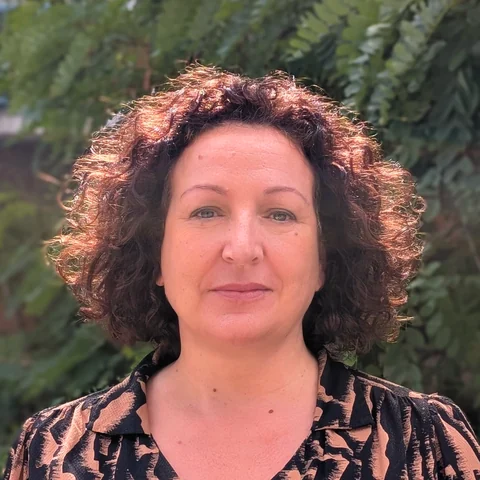
Co-founder · President
Trained as an engineer and passionate about cognitive science, Audrey founded and ran a school built on alternative pedagogies. Altaïr is a continuation of that work, and will help ever more students.
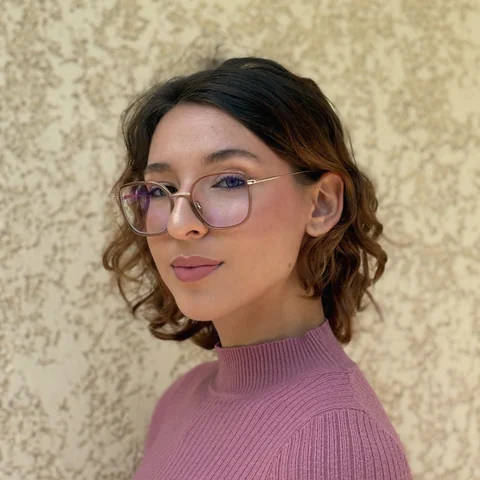
Co-founder · Managing Director
Trained in design and holding a bachelor’s degree in education sciences, Camille is passionate about education that fits each individual. Having herself attended schools with alternative pedagogies, she has seen how much a student can flourish when they are listened to.

Co-founder · Managing Director
Trained in computer technology, Augustin attended a Montessori school and other alternative-pedagogy schools. Neurodivergent, he understands the difficulties a student faces in a system that does not suit them, and he is ready to adapt it for everyone.

Our long-term goal: for Altaïr to also support students who have no access to school.
Altaïr’s Notebooks
Why we chose to start from the student’s questions rather than from a fixed pathway.
Read the articleHow Altaïr supports a student’s reasoning, one question after another.
Read the articleFont, colors, voice, speed: the reading-comfort settings, explained simply.
Read the articleFAQ
{{para.text}}